

Historically, the South African classroom has always been the crucible of revolution. Philosophically, education is more than a simple transfer of data; it is what Paulo Freire called the “practice of freedom”, the means by which a generation deals critically with reality to discover how to transform it.
In our borders, this is not a mere academic theory; it is a historical mandate. Yet, as we prepare for the landmark Student Cities Indaba, we must confront a sobering paradox: while we have mastered expanding access to education, we are struggling to build an economy that can retain the talent we have cultivated.
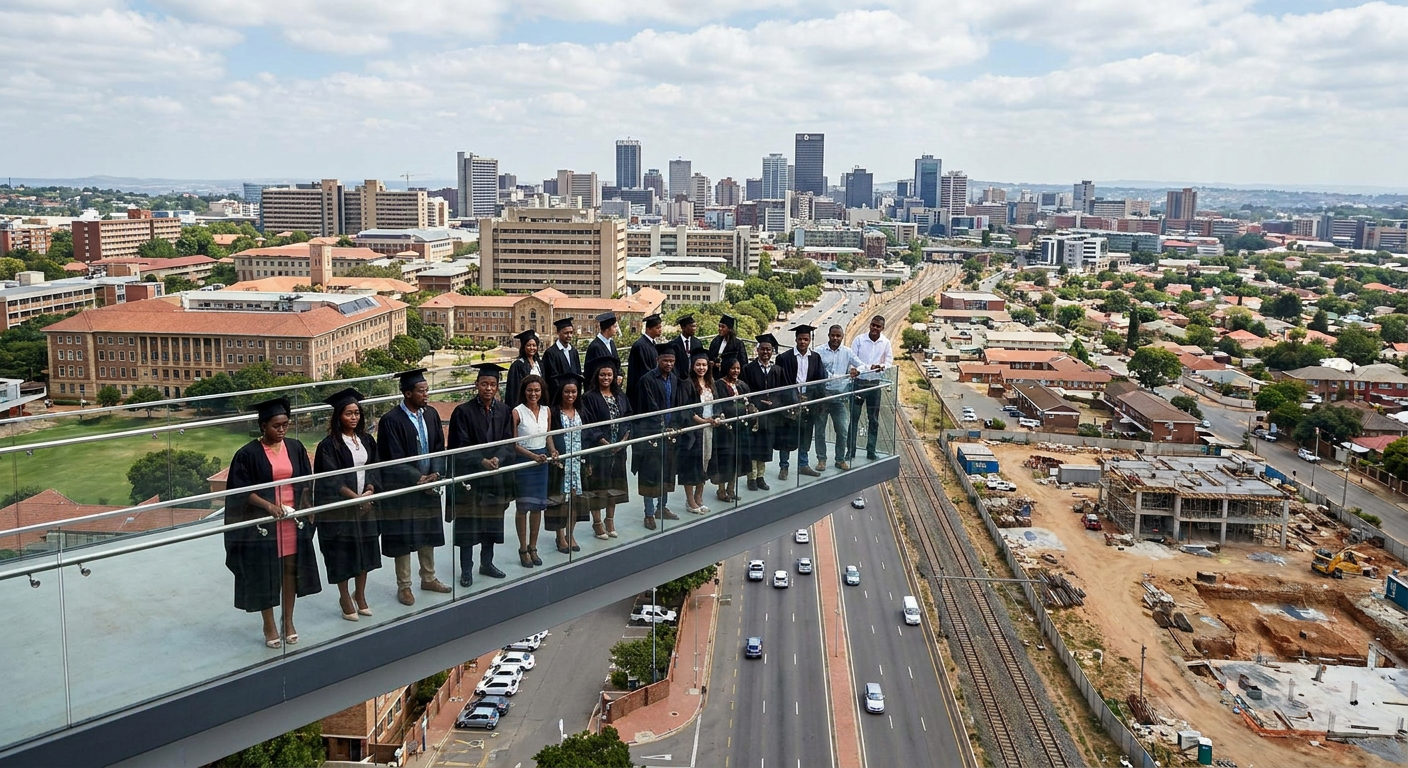
The statistics for 2026 paint a grim picture. With youth unemployment remaining the most significant threat to our national stability, we are witnessing a phenomenon I call the “Graduation Cliff.” Every year, thousands of young people ascend the heights of academic achievement, only to find that the bridge to economic participation ends mid-air.
As Thamsanqa Maqubela recently argued, our university towns, from our bustling metros to our rural hubs, are economic anchors that remain fragile because our efforts are fragmented. I stand in firm support of this vision: universities cannot operate in isolation from the cities that surround them.
The future of our graduates is inseparable from the economic vitality of the places where they study. If our youth are the solution to our stagnant development, then “Student City” is the engine that must power it.
I believe we must finally admit that the Right to Education is a hollow victory if it does not lead to the Right to Economic Dignity. To provide a degree without a functional marketplace is violating the soul of human potential.
The ambition to attract and graduate millions of students across our nation is our North Star, but volume alone is not the goal. The goal is a fundamental reimagining of what Maqubela calls the “student employability and entrepreneurship nexus.” We must accept that a student’s environment is their “silent teacher.” If a student lives in a precinct plagued by crime, digital exclusion, or industry isolation, we are effectively stifling the very innovation we claim to seek.
My mandate as a Programme Director in this Indaba is to transform it from a standard conference into a National Strategic War Room. We are synchronising three critical gears of progress to ensure that our youth move from being “job seekers” to “wealth creators”:
1. The Sovereign Urban Precinct: We must stabilise the environments where our youth learn. By implementing coordinated urban management, we ensure that student cities are safe, vibrant, and digitally sovereign zones that foster focus rather than fear.
2. The Procurement Revolution: Universities must stop being islands of consumption. They must leverage their massive spending power to buy directly from the student and graduate entrepreneurs they produce. The institution must become the graduate’s first client.
3. The Covenant of Accountability: Industry cannot afford to wait at the finish line; they must help us build the track. This means co-designed curricula and direct pipelines that move talent into the workplace before the ink on their degree is dry.
The future of South Africa is not a distant “maybe.” It is sitting in lecture halls across our country right now—fueled by ambition but haunted by the prospect of unemployment.
The Student Cities Indaba is our opportunity to turn that anxiety into a roadmap. We are not promising an overnight miracle; we are committing to the disciplined, pragmatic masonry of building a bridge that actually holds the weight of our youth’s dreams.
Our youth are not a problem to be solved; they are the solution we have been waiting for. We are building the infrastructure of hope, and the work begins now.


