


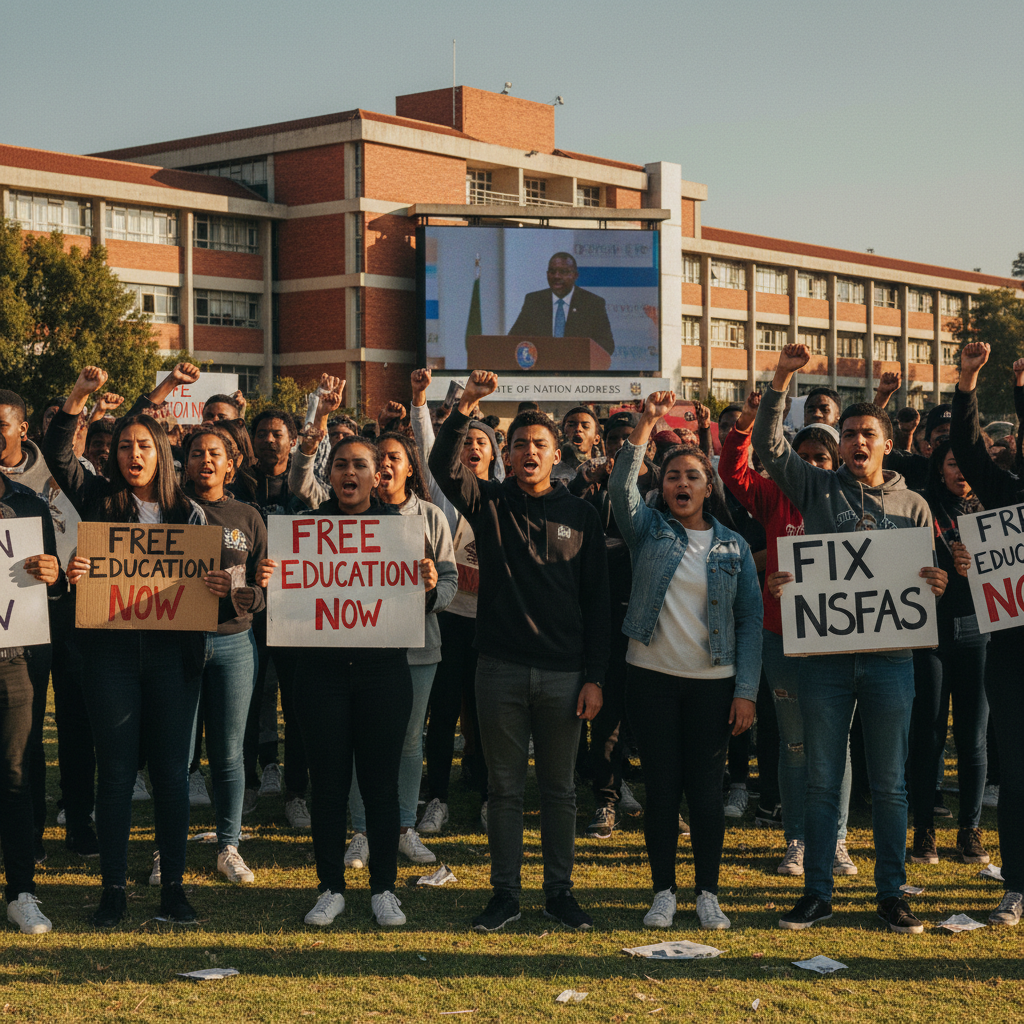
The current students’ protests during the state of the nation address by President Cyril Ramaphosa, at Wits University and other universities, are symptoms of systematic exclusions of students from poor families. African National Congress-led governance was a promise of the new era, which was going to transform the lives of all and sundry, both the apartheid oppressors and the formerly oppressed South Africans. The promise of free education, as espoused in the Freedom Charter, has been a dream deferred for young people. The dream of a transformed higher education through academic excellence and social mobility for poor students seems like a pipe dream. 30 years of democracy display a dysfunctional higher education funding system. Financial and academic exclusions are the lived and learned experiences for poor students and students from working-class families.
The failure of NSFAS to provide free higher education is also the main source of instability in South African universities. NSFAS has increased the inequalities in higher education for students from low-income households. The NSFAS administrative crises, delayed payments, and governance failures have undermined the stability of the universities. The failure by the ANC-led government does not reside in the lack of a proper funding model/s. It is caused by the lack of educational developmental visions within the higher education sector.
South Africa needs a Higher education transformational agenda that addresses historical debt, massification of university admissions without access, or access without success. Lack of structural and sustainable funding models, institutional competencies, and a minimal or a shortage of formal supporting programs for first-generation students. The main culprit is the poor or lack of accountability within NSFAS governance structures, intertwined with crony political patronage.
The ANC-led government sees itself as the saviour of poor black children who are the historical victims of apartheid. Students from previously disadvantaged communities must be seen as agents of their transformation. They must be provided with a space to showcase their agency where they will become future leaders, business leaders, scientists, doctors, owners of means of production, innovators, researchers, economists, knowledge creators and world-class leaders. They must indicate their own agency in the socio-economic transformation of their world. They must be the drivers of social justice in the world, not the survivors of poverty saved by the ANC.
The ANC shaped poor youth as inactive heirs of the ANC-led state benevolence rather than as co-creators of the nation-building. The problem is not funding or money, it is the failure of political imagination, poor governance and accountability, and the failure to recognise the youth as the co-creators or agents of the country’s future.
Dr Sefoko Ramoshaba is a higher education leader with over 30 years of experience in student development and transformation at South African universities. He holds a PhD in Public Management and Development and is a published scholar and advocate for social justice and community empowerment.


