

Initiative expected to unlock major economic opportunities for local businesses across the province
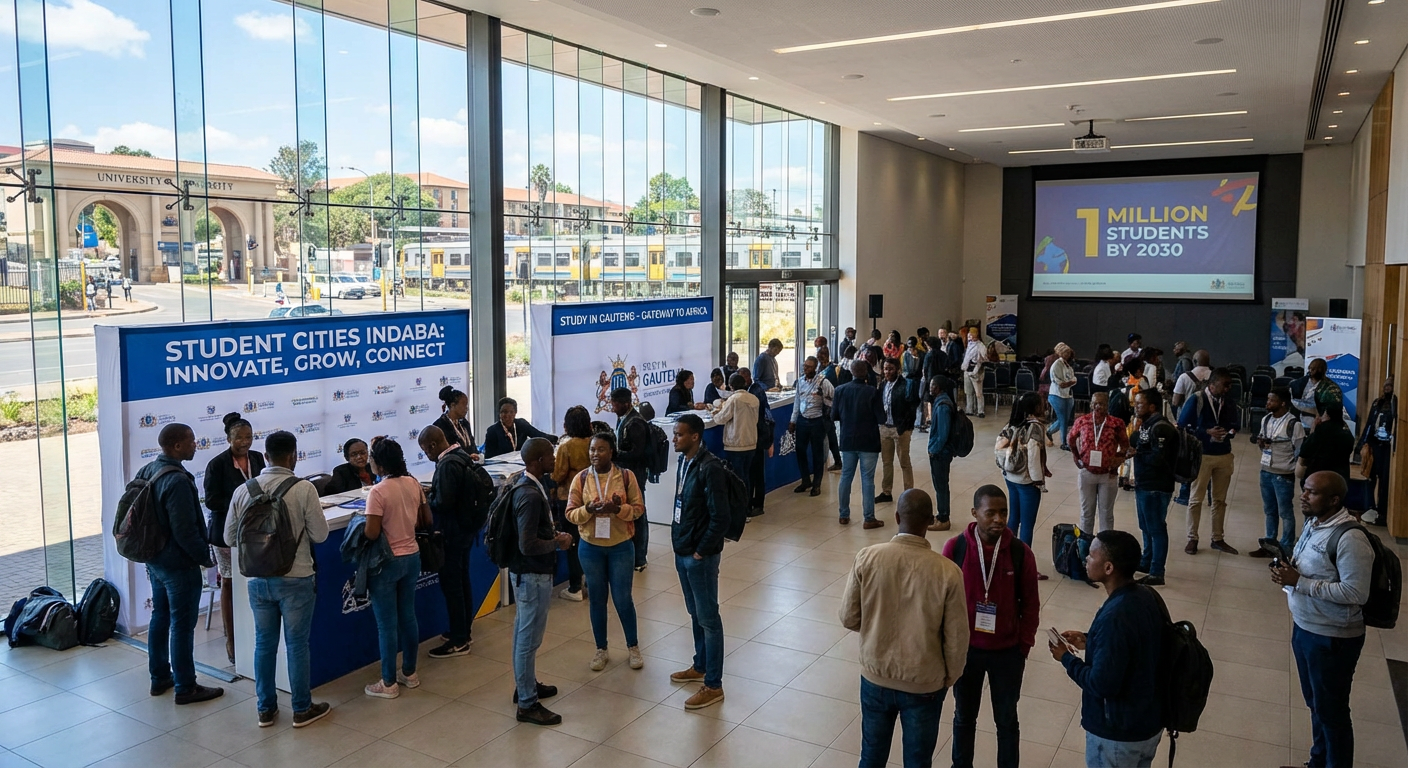
Gauteng is preparing to host one of the most significant higher education and urban development gatherings in recent history, with the Student Cities Indaba convening from 9 to 11 July 2026. The event is expected to bring together leaders from government, universities, industry and the student sector in a concerted effort to reshape the province’s academic landscape and position it at the forefront of Africa’s knowledge economy.
The indaba comes at a time when Gauteng’s education ecosystem is already one of the most concentrated on the continent. The province’s college towns and university precincts are home to eight public universities, eight public TVET colleges, a range of private higher education institutions and occupational training colleges, as well as academic hospitals, research centres and innovation hubs. Together, they form a dense network of learning and research infrastructure that provincial leaders believe can be leveraged more strategically.
At the heart of the three-day gathering will be a bold ambition: to attract one million local and international students to Gauteng by 2030. The target will be driven through the launch of the “Study in Gauteng” Campaign, a five-year initiative designed to market the province as South Africa’s premier study destination and a gateway to broader opportunities on the African continent.
Organisers say the indaba will move beyond traditional higher education discussions to focus squarely on the urban environments surrounding campuses. Delegates are expected to examine how student precincts can be made safer, more vibrant and better aligned with the needs of a modern student population. The success of the UP-Hatfield City Improvement District will be presented as a working model of how coordinated urban management can transform university districts into attractive, well-run spaces that support both academic success and economic activity.
Discussions are likely to span a wide range of issues affecting student cities, including the provision of affordable, high-quality accommodation, improved transport connectivity, enhanced public safety, and better-managed public spaces. Urban planners and education stakeholders are also expected to explore the development of digital hubs, learning resource centres and innovation districts that can stimulate entrepreneurship and research-led growth.
Provincial officials believe that strengthening student cities is not merely an education project but an economic strategy. Globally, cities that successfully integrate universities into vibrant urban ecosystems tend to experience increased business activity, the growth of innovation hubs and expanded employment opportunities. By investing in student-friendly infrastructure and governance, Gauteng hopes to retain youth talent within the province while fostering a pipeline of entrepreneurs, researchers and skilled professionals.
With preparations now underway, expectations are rising that the Student Cities Indaba could redefine how South Africa approaches the development of university towns. If successful, the initiative may position Gauteng not only as a national academic leader but as a continental hub for innovation, research and youth-driven economic growth.
As one of the key messages emerging ahead of the gathering suggests, student cities must be safe, vibrant and designed for innovation — places where young people can live, learn and build the future economy.


