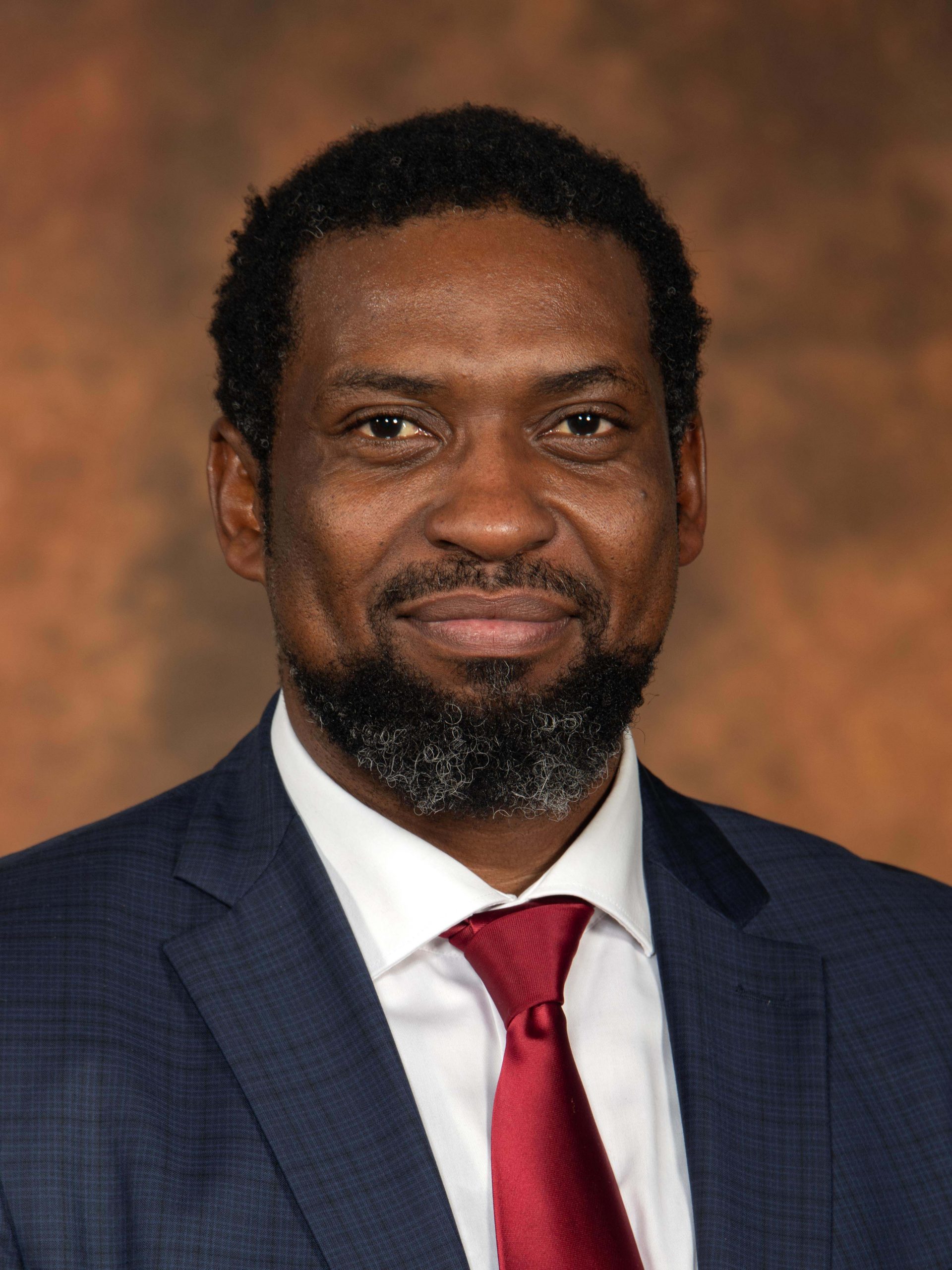
Johannesburg — Higher Education and Training Minister Buti Manamela has called for a fundamental overhaul of South Africa’s skills planning system, describing the ability to understand and anticipate labour market needs as a matter of national sovereignty.
Speaking at the inauguration of the Public Service Sector Education and Training Authority (PSETA)–University of Johannesburg (UJ) Public Sector Skills Planning Research Observatory today, Minister Manamela framed the new initiative as part of a broader effort to build an integrated, evidence-driven national skills intelligence system.
“A state that cannot see its own labour market cannot plan its own future,” he told representatives from government departments, sector education and training authorities (SETAs), organised labour, business and academia. “Skills intelligence is therefore not back-office work. It is sovereign work.”
The Minister situated the Observatory’s launch within what he described as a period of “profound transition,” citing the effects of digitalisation, artificial intelligence, the just energy transition, demographic shifts and global geopolitical instability.
Domestically, he pointed to persistent structural challenges, including unemployment, inequality and youth exclusion. More than three million young people remain outside employment, education and training, he said, a figure that continues to test the responsiveness of the post-school system.
Minister Manamela recounted a recent encounter with a 23-year-old woman at a Community Education and Training (CET) centre who asked: “Who decides what courses are offered? Who decides that they will give us jobs?”
“That question, in its plainness, contains the entire problem this Observatory is here to address,” he said.
According to the Minister, the country’s current skills planning landscape is marked by fragmentation, duplication and weak coordination. Workplace Skills Plans and Sector Skills Plans have, in many instances, become compliance exercises rather than strategic instruments, he argued. At the same time, shortages in critical occupations coexist with graduates struggling to access employment pathways.
“We have multiple data sources that do not speak to one another,” he said. “Improving the data alone will not solve this. What is required is institutional integration and a shared national skills intelligence capability.”
The Observatory forms part of what Minister Manamela described as a “Skills Revolution” being led by the Department of Higher Education and Training. The initiative aims to better align planning, funding and implementation across the Post-School Education and Training (PSET) system.
Key elements include the restructuring of the Human Resource Development Council (HRDC) to serve as the centre of a single national skills intelligence architecture, and a policy shift in the 2026 Budget to double the SETA mandatory grant from 20% to 40%.
Within this framework, the Minister said, sector-specific observatories such as the PSETA–UJ initiative would function as “nodes” feeding into a coherent national system, not as parallel or competing centres of authority.
“The Department carries the responsibility for the coordination of the PSET system. That responsibility is not delegable,” he said. “But it is also not exercised alone.”
He emphasised partnerships with SETAs, universities, Technical and Vocational Education and Training (TVET) and CET colleges, the South African Qualifications Authority, the Quality Council for Trades and Occupations, the Council on Higher Education, the National School of Government, labour and business.
The new Observatory is expected to focus specifically on public sector workforce planning and capability development.
Minister Manamela said it could help shift the state from reactive to anticipatory planning by forecasting occupational demand, tracking labour market transitions and identifying emerging competencies before shortages reach crisis levels.
He also linked the initiative to broader efforts to professionalise the public service. A capable and ethical developmental state, he said, requires structured career pathways, competency frameworks and evidence-based workforce planning.
“The state we are trying to build will run on technical capability, governance capability and ethical leadership,” he said, adding that these capabilities must be systematically mapped and developed.
The Minister highlighted the importance of digital transformation in shaping the future public service, describing it less as a technology issue and more as a capability challenge.
“The future public service will be more digital, more data-driven, more analytically demanding,” he said. “The distinction will be made by people, by skills, and by the institutions we build to plan for them.”
Minister Manamela returned to the question posed by the young CET student. His ambition, he said, is that within five years, decisions about courses and training pathways will no longer be made in isolation, but through a national system capable of aligning education provision with economic and social needs.
“That system does not yet exist. It is being built,” he said, reiterating that the repositioned HRDC would sit at its centre, with SETAs, universities and research bodies forming its operational architecture.
He commended PSETA and the University of Johannesburg for establishing the Observatory and expressed confidence that it could make a substantive contribution to national development.
“The question is whether we build a state that can see, plan and act with coherence,” Minister Manamela said. “Because if we cannot see our labour market, we cannot plan our future.”