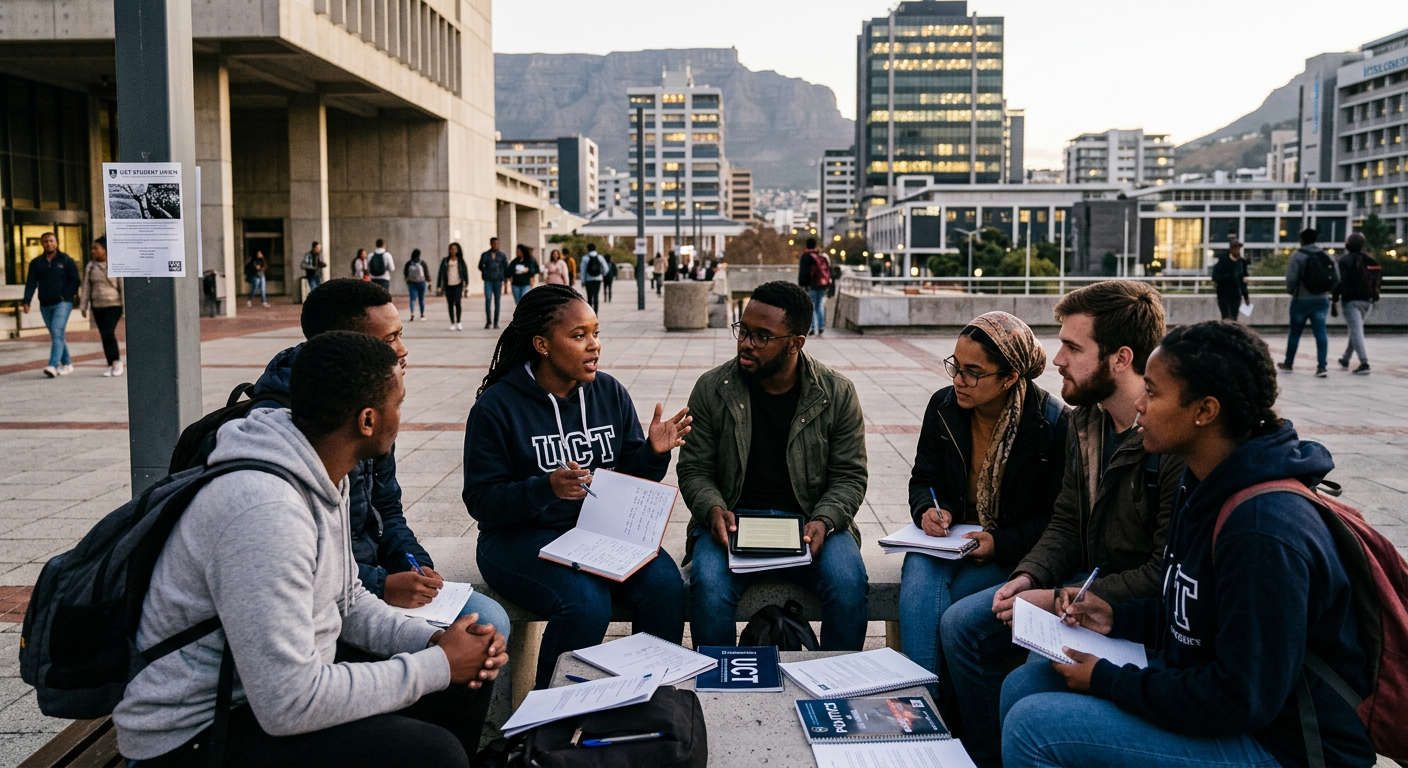
Students in South Africa’s university cities are demanding delivery, not declarations.
As South Africa continues to confront youth unemployment, rising living costs, housing shortages, and growing concerns about student well-being, a pressing question echoes across campuses: are political party policies genuinely responding to students’ lived realities?
This question will be the focus of a Student Policy Debate scheduled for Saturday, 19 September 2026, in the City of Tshwane. The gathering will bring together student leaders, policymakers, academics, civil society representatives, and young citizens to interrogate whether political commitments are translating into practical solutions for student communities.
The debate forms part of the build-up to the upcoming Student Cities Indaba, which will take place 21-23 September 2026 in the City of Tshwane, where deeper discussions will focus on reimagining South Africa’s urban centres as inclusive, responsive environments for students and young professionals.
South Africa’s student cities, Johannesburg, Pretoria, Cape Town, Durban, Bloemfontein, Gqeberha, and Makhanda, host thousands of young people whose experiences extend well beyond lecture halls. Academic success is shaped not only by curriculum and teaching quality, but by access to safe accommodation, affordable transport, reliable healthcare, digital connectivity, security, and meaningful employment opportunities.
For many, accommodation remains the most immediate and urgent concern. Despite repeated policy commitments to address student housing shortages, demand continues to exceed supply. Students report overcrowded residences, escalating rental costs, and accommodation located far from campuses — often increasing transport expenses and exposing them to safety risks.
Digital inclusion presents another fault line. While online and blended learning have broadened educational access, unequal access to affordable data, stable internet connectivity, and appropriate digital devices continues to disadvantage many students. Although digital access is increasingly recognised as a policy priority, students are questioning whether implementation efforts match the scale and urgency of the challenge.
Safety and security remain critical. Criminal activity in and around campuses and student residences continues to undermine both academic performance and personal well-being. Students are calling for stronger collaboration between municipalities, higher education institutions, law enforcement agencies, and local communities to create safer, more responsive urban learning environments.
Graduate employability adds further pressure. South Africa’s youth unemployment crisis leaves thousands of graduates struggling to transition into meaningful work each year. While political parties routinely announce job creation initiatives, internship programmes, and skills development plans, students are increasingly demanding measurable outcomes and tangible pathways — not proposals that fail to materialise.
Mental health and wellness have also moved to the forefront of student concerns. Academic pressure, financial stress, social challenges, and uncertainty about the future have intensified demand for counselling and support services. Many argue that mental health provision must be recognised as fundamental to educational success and youth development, rather than treated as a secondary consideration.
Beyond these immediate challenges, students are engaging in broader conversations about the future of South Africa’s urban centres. Sustainable public transport, green spaces, cultural and recreational facilities, innovation hubs, and entrepreneurial support systems are considered necessary components of student-friendly cities that can attract and retain young talent.
The debate will also scrutinise the role of municipalities in supporting higher education institutions. Issues of service delivery, infrastructure development, urban planning, and effective collaboration between local government and universities are expected to feature prominently, setting the tone for more comprehensive discussions at the Student Cities Indaba.
At its core, the conversation is about accountability. Are students meaningfully consulted when policies are drafted? Are municipalities responsive to the distinct needs of university communities? And how can young people ensure that political commitments translate into measurable progress?
As South Africa prepares for future electoral and policy cycles, student voices are becoming increasingly influential in shaping the national conversation. Young people are not merely asking to be heard, they are demanding practical solutions that enhance their quality of life, strengthen educational outcomes, and expand access to economic opportunity.
The road to the Student Cities Indaba begins with these critical conversations. For today’s students, the message remains unequivocal: policies matter, but delivery matters more.
Eric Segomotso Sebokedi-Phetlhu is a Student Times Correspondent