A Quiet Urban Transformation
Across Southern Africa, a quiet transformation is underway. University enrolments are rising. Campuses are expanding. Private student housing markets are booming. Informal economies are clustering around lecture halls and transport nodes. The growth is visible, measurable, and in many ways encouraging.
Yet one reality remains largely unacknowledged: student life has outgrown campus governance.
Students no longer live only within university gates. They live in cities. They rent flats in surrounding neighbourhoods. They commute using municipal transport systems. They buy food from local retailers and informal traders. They participate in digital and creative economies. They shape nightlife, culture, and civic discourse.
They are not peripheral to the city. They are part of its fabric.
Government, however, has not kept pace.
A Governance Vacuum
Universities and colleges often assume their responsibility ends at the campus perimeter. Municipalities frequently treat students as temporary residents rather than long-term contributors to urban life. Meanwhile, segments of the private sector extract value from rental and retail markets with limited accountability for the living conditions or spatial integration of their tenants.
In the middle of this structural gap stand students — absorbing financial, physical, and social risk.
This is not a marginal welfare concern. It is a governance vacuum.
Student Cities Without Planning
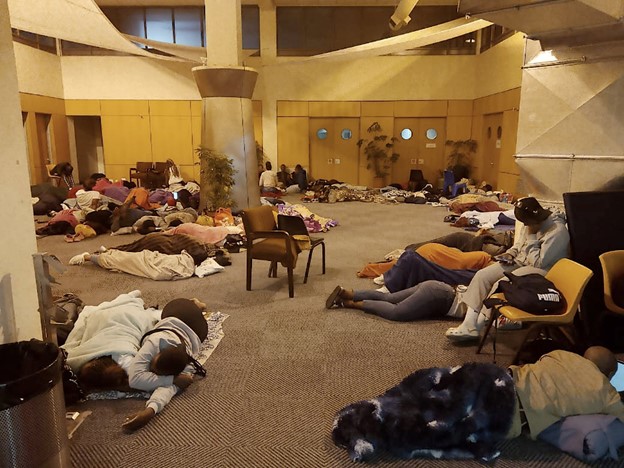
In cities such as Johannesburg, Polokwane, Mthatha, and many others, student populations have expanded far beyond the capacity of on-campus housing and infrastructure. As accommodation shortages persist, students disperse into neighbourhoods never designed as student precincts.
The consequences are visible in overcrowded and informal accommodation, exploitative rental practices, unsafe commuting routes, poor lighting and pedestrian infrastructure, and the rise of informal survival economies. Social tensions emerge between long-term residents and transient student populations.
These realities are too often framed as behavioural issues or isolated welfare challenges. But they are neither. They are urban planning failures.
Southern African cities are already functioning as student cities — they are simply not planning as such.
The Invisible Student Economy
Students are not merely consumers of services; they are economic actors. They drive rental markets. They sustain public and informal transport systems. They energise retail and food economies. They participate in gig work, creative industries, and digital entrepreneurship. Entire micro-economies rise and fall with academic calendars.
Yet this student economy remains largely unmeasured and unmanaged. When it surfaces in public discourse, it is usually in moments of crisis, safety incidents, housing exploitation, or regulatory disputes. Rarely is it deliberately integrated into Local Economic Development strategies or municipal planning frameworks.
If intentionally harnessed, the student presence could anchor inclusive, knowledge-based urban growth.
A Necessary Reframing
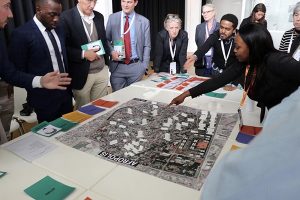
The Student Cities Colloquium seeks to advance a different conversation. Rather than asking how universities can manage student welfare more efficiently, it asks whether student challenges are in fact urban design questions. Whether housing shortages reflect market distortions. Whether unsafe commutes signal failures in transport and mobility. Whether economic vulnerability points to gaps in development planning. Whether fragmentation ultimately reveals a coordination problem between institutions.
At its core lies a question policymakers can no longer postpone: what does it mean for a city to take responsibility for its students?
Why Now?
The urgency is unmistakable. Higher education participation continues to expand across the region. Municipal infrastructure is under strain. Youth unemployment remains high. Urban inequality persists. Student populations are growing faster than integrated planning systems can respond.
Without deliberate coordination between universities, municipalities, and the private sector, the governance vacuum will deepen. But with intentional collaboration, student cities can become engines of inclusive growth, social cohesion, and innovation.
The choice facing Southern Africa is stark: continue managing student issues reactively, or design cities that recognise students as permanent contributors to urban life.
The Student Cities Colloquium, scheduled for 26–28 March 2026 at the Lagoon Beach Hotel in Milnerton, Cape Town, is therefore not merely a conference. It is an invitation to rethink the relationship between higher education and the city itself.
For registration inquiries, contact: africansmartsstudentcities@gmail.com