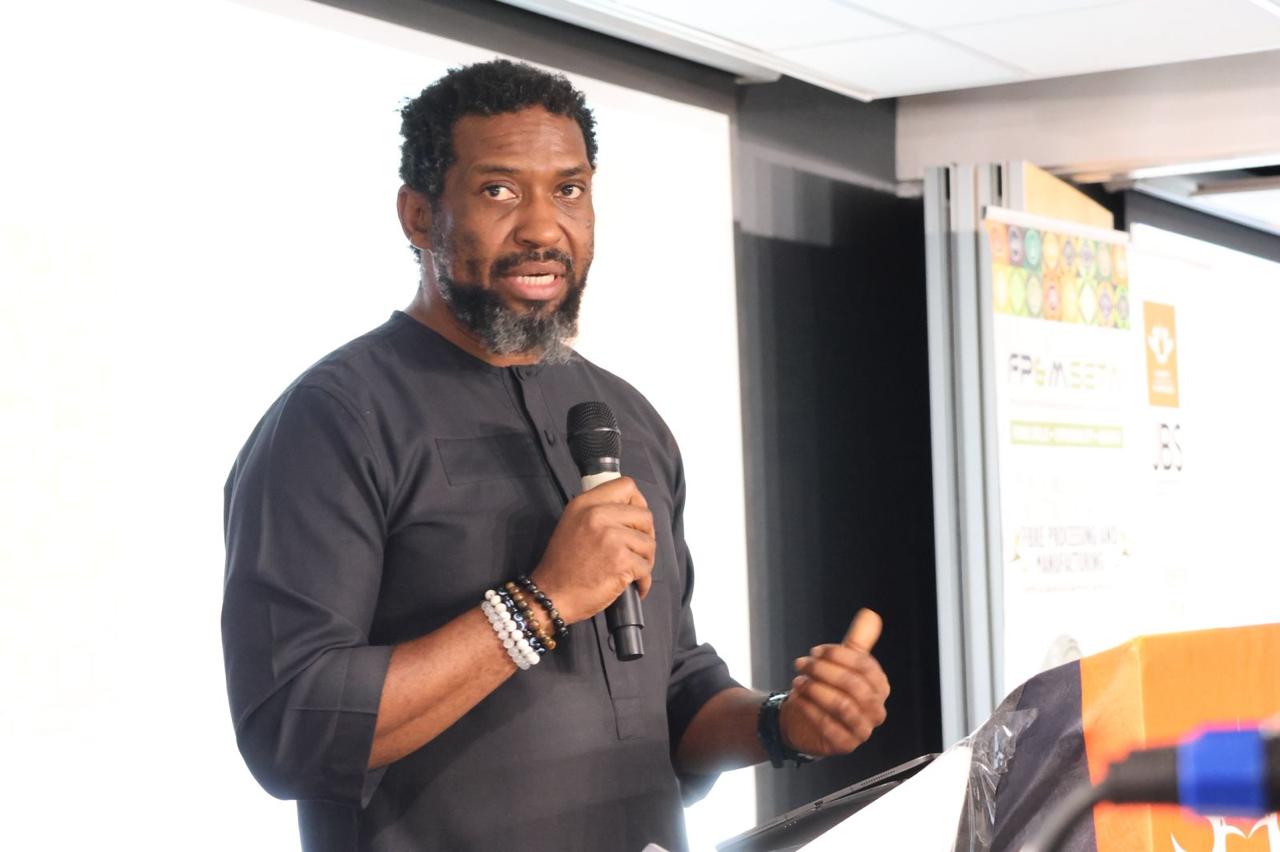
JOHANNESBURG – Higher Education and Training Minister Buti Manamela has cautioned that South Africa’s ability to compete in the digital economy is being undermined not only by a shortage of skills, but also by slow-moving institutions struggling to adapt to rapid technological change.
Addressing delegates at the Johannesburg Business School Skills Forum on May 22, Minister Manamela argued that the country faces what he termed a “workforce transition-capacity problem”, rather than a conventional skills deficit. He said the debate around the future of work often collapses into fashionable terms such as “AI readiness” and “digital transformation”, while failing to confront deeper structural questions about inequality and institutional responsiveness.
“The problem is no longer diagnosis. The problem is institutional response,” the Minister said, noting that artificial intelligence and automation are already reshaping sectors including banking, logistics, mining, manufacturing and public administration.
He cited global projections that nearly half of core workplace skills are expected to change within the next few years, warning that South Africa does not have the option of opting out of this transition. The question, he said, is whether the country will shape the process deliberately and inclusively, or participate passively on terms set elsewhere.
Minister Manamela challenged the assumption that South Africa’s main difficulty is a lack of graduates, artisans or engineers. Instead, he argued that universities, TVET colleges and Sector Education and Training Authorities (SETAs) remain configured for a more stable industrial economy in which qualifications lasted decades and career paths were predictable. In today’s labour market, he said, workers require continuous reskilling and institutions must respond with far greater agility.
The Minister acknowledged that South Africa enters the digital transition burdened by deep structural inequality. Millions of young people remain outside employment, education or training, while many schools and communities still lack reliable internet access. As the labour market increasingly assumes digital competence as a baseline requirement, he warned that the digital divide is becoming an economic and social divide.
He also pointed to imbalances within the post-school education and training system itself, arguing that public discourse often centres on universities, despite the majority of young people navigating their futures through TVET colleges, community education centres and occupational training pathways. These sectors, he said, are central to workforce development but remain under-resourced and undervalued.
At the same time, Minister Manamela conceded that government shortcomings have contributed to the problem. South Africa is not short of policy frameworks or strategy documents, he said, but has often struggled with coordination, execution and accountability. Institutions frequently operate in silos, and qualifications are sometimes developed without sufficient alignment to labour market realities.
Among the steps the government intends to prioritise are expanding digital infrastructure across post-school institutions, accelerating the development of qualifications in areas such as artificial intelligence, cybersecurity and renewable energy, and strengthening coordination between education and economic planning structures. He also emphasised the need to shift the skills system’s focus from compliance-driven administration to measurable workforce outcomes.
However, the address did not provide detailed timelines or funding commitments for these reforms, leaving open questions about how quickly institutions facing financial and infrastructure constraints can modernise.
The Minister placed responsibility not only on government but also on universities, SETAs and industry. He urged higher education institutions to make curricula more responsive and interdisciplinary, and called on employers to treat skills development as a shared national responsibility rather than an obligation delegated to the state.
“The countries that will benefit most from the digital revolution will not necessarily be those with the most advanced machines,” he said. “They will be those with the most capable people.”
The Minister stated that students and graduates facing a volatile labour market must recognise that technological change is already in progress. The success of institutional reform will determine whether this change leads to greater inclusion or exacerbates existing inequalities.