

If one wishes to understand both the power and the peril of town-and-gown relations in South Africa, one need look no further than the three campuses of North-West University. Stretched across Potchefstroom, Vanderbijlpark and Mahikeng, NWU tells a story that reads like a modern tale of three student cities, each shaped not only by the university itself, but by the health, functionality and vision of the municipalities that host them.
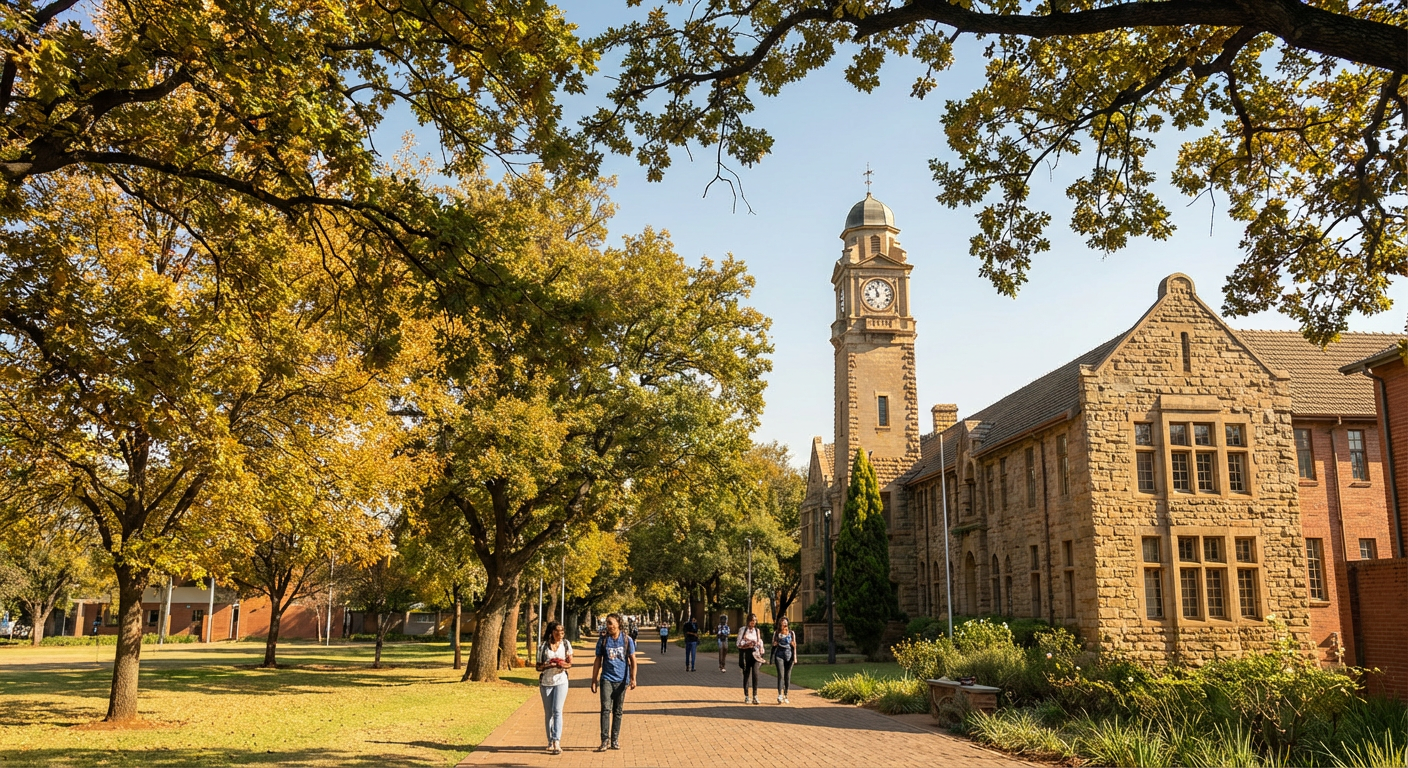
In Potchefstroom, the narrative is one of intention and achievement. The NWU Potchefstroom campus stands as one of South Africa’s clearest examples of a university-led student precinct done right. Situated within the JB Marks Local Municipality, the campus has helped cultivate a thriving, well-managed and attractive student environment. What surrounds it is not simply a collection of lecture halls and residences, but a deliberately shaped student village, clean, vibrant and economically active.
This success is not accidental. It is the product of political will, institutional leadership and purposeful collaboration between the university and the city. Central to this achievement has been the strategic application of a City Improvement District model, which has enabled coordinated urban management and sustained investment in the precinct. In many respects, Potchefstroom mirrors the success of the Hatfield CID in Tshwane, a benchmark for integrated urban management in student communities. It is a demonstration of what becomes possible when governance works and partnerships are nurtured.
Empirical research led by David Dyason and colleagues at North-West University reinforces this reality. Their work positions the Potchefstroom campus as an anchor institution, stable, long-term and foundational to the local economy. Unlike mobile industries that relocate when conditions shift, the university remains. It provides consistent employment, procurement, infrastructure investment and consumer demand. In a smaller city context such as Potchefstroom, this presence buffers the regional economy against shocks and sustains a wide web of interlinked economic activity. Here, the university is not merely situated in the city; it underpins it.
Vanderbijlpark presents a quieter, more subdued chapter. Located along the banks of the Vaal River, the campus enjoys a pristine and somewhat insulated setting. Its environment is serene and stable, shielded to a degree from the broader urban challenges confronting Vanderbijlpark. The student experience is functional and conducive to learning, even if it lacks the vibrancy and economic dynamism of Potchefstroom. In many respects, it is the middle child of the NWU system, steady, dependable, but not transformative.
Yet beneath this calm lies a fragmented student-city experience. Just beyond the university’s immediate environment, students from the neighbouring Vaal University of Technology encounter a very different reality. In areas such as Small Street, the student social economy operates with limited coordination or oversight. Bars and cafés dominate the landscape, often without the broader planning frameworks that encourage healthy, safe and balanced student lifestyles. The contrast is stark and revealing. Where precincts are not intentionally designed around safety, clean, well-managed public spaces, and responsible, student-oriented enterprises, decline sets in with quiet predictability. Urban neglect invites grime. Grime creates vulnerability. Vulnerability, particularly in poorly lit and unmanaged spaces, exposes students, especially young women, to crime and gender-based violence. The absence of a coordinated precinct strategy across institutions in the same city leaves a vacuum, and cities rarely tolerate vacuums for long.
Then there is Mahikeng—a campus with a proud history and painful truths. Once home to the University of Bophuthatswana, Mahikeng in the 1970s and 1980s was among the cleanest and best-planned university towns in the country. As the capital of Bophuthatswana, it possessed a vibrant student economy and a carefully maintained urban environment. The campus was embedded in a functioning city.
The collapse of the Bophuthatswana state in the early 1990s marked the beginning of a different trajectory. Decades of municipal decline followed. Today, within the Mahikeng Local Municipality of the Ngaka Modiri Molema District Municipality, the city grapples with service delivery failures, decaying infrastructure, and weakening urban management. The consequences for the NWU Mahikeng campus—and for its neighbour, Taletso TVET College, have been profound.
Surrounding areas, such as Unit 8 and nearby villages, have deteriorated, eroding the precinct’s attractiveness as a study destination. What was once a vibrant student environment now struggles with compromised safety, inconsistent service delivery and declining accommodation quality. The student experience is no longer aligned with the expectations of a modern university ecosystem. In this context, the academic project itself feels exposed.
The story of NWU is therefore not simply about three campuses. It is about three cities and three distinct governance realities. Where municipalities function and partnerships thrive, as in Potchefstroom, student cities flourish. Where conditions are neutral, as in Vanderbijlpark, campuses endure. But where municipalities falter, as in Mahikeng, the university cannot remain untouched. The city’s health seeps through the campus gates.
And yet, Mahikeng’s story need not end in decline. The success of precinct-based interventions such as the City Improvement Districts in Potchefstroom and Hatfield offers a practical blueprint. These models demonstrate how universities, as anchor institutions, can move beyond passive coexistence with their host cities and actively shape, stabilise and revitalise their surroundings. For NWU Mahikeng, this would require a deliberate shift from hope to action: the establishment of a campus precinct improvement district, strengthened partnerships with local government and private stakeholders, and focused investment in safety, infrastructure and a sustainable student housing ecosystem.
Ultimately, this is not a challenge unique to North-West University. Across South Africa, universities sit within municipalities whose trajectories vary widely. The lesson is clear and urgent. Cities shape campuses. Governance shapes opportunity. And where town and gown move in step, student cities do not merely survive, they thrive.


